Egyptology has really shed light on things in ancient Egypt, many of which are things not known in other ancient civilizations. However, it wouldn’t have been made possible without the discovery of many artifacts. These artifacts are what allow us to know ancient Egypt’s culture, religion, literature, art, and most importantly its history. There are countless artifacts that have definitely left a mark on the world. Artifacts are the way of learning history, from the first historical document in the world, to the creation of wigs, and the forgotten tomb overflowing with history
Narmer Palette
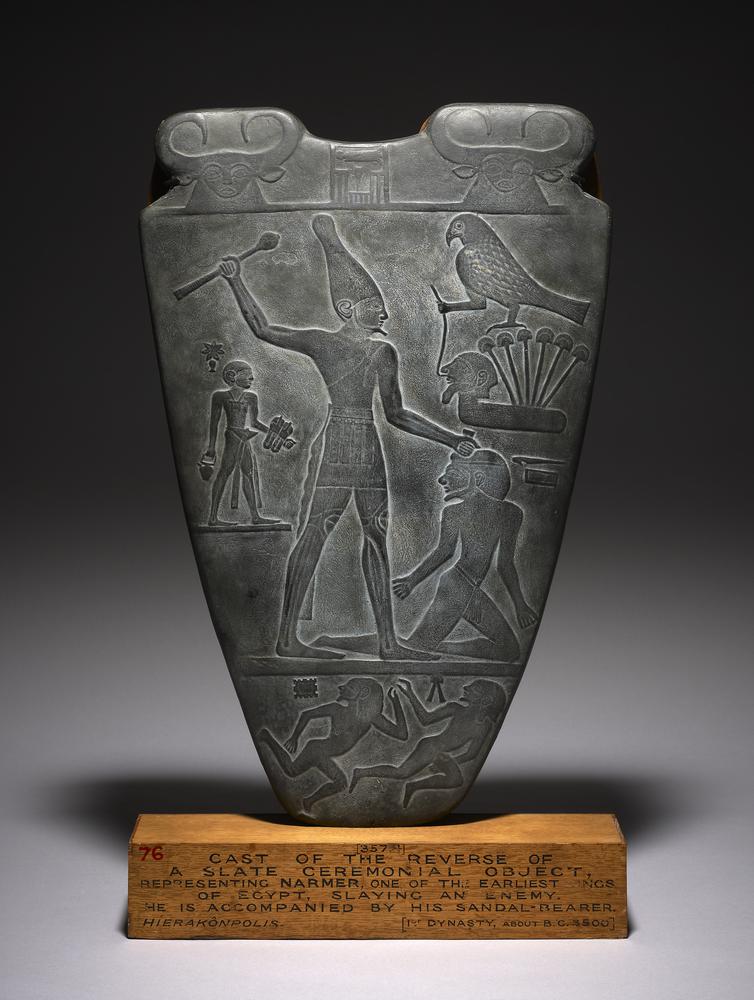
Long before ancient Egypt existed, humans developed settlements along the Nile River, forming different kingdoms. There was an upper and lower kingdom, and they were unified due to many social, political, and economic factors. However, it wouldn’t have been initiated without the help and reign of King Narmer (3150 BCE). “SCHOLARS NOW BELIEVE THE FIRST KING MAY HAVE BEEN NARMER WHO UNITED UPPER AND LOWER EGYPT AT SOME POINT C. 3150 BCE.” This Pharaoh, he also went by the name Menes, was the first to rule in the Dynastic Period. Menes literally means “he who endures” which made archaeologists come to the understanding that Menes and Narmer are the same being. The Narmer Palette, also known as Narmer’s Victory Palette, is a picture engraved in a siltstone. This engraving depicts King Narmer defeating his enemies and uniting both kingdoms. These types of small detailed stone engravings were used for ceremonial tablets and it is said to be the earliest document ever discovered. This artifact symbolizes the change both kingdoms experienced whilst King Narmer ruled. In addition to that, archaeologists discovered the Narmer Palette in 1897-1896 CE, and it gave many people studying Egypt some peace of mind, regarding the beginning of a united Egypt. There were other stories that told tales about a king named Menes who united, but the Narmer Palette gave a more detailed description. This artifact not only has immense historical significance, it contributed a lot to Egyptology, and resembles the cause and consequence of being a united kingdom. As many are already, there was no other civilization more stable than ancient Egypt.
The Creation of Wigs
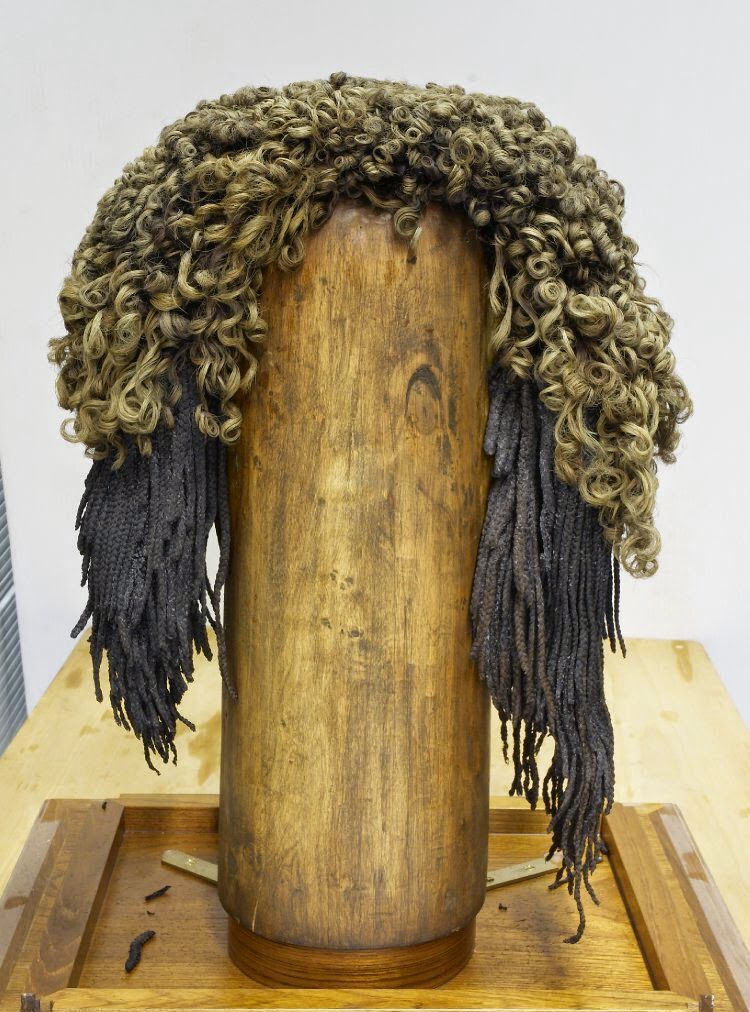
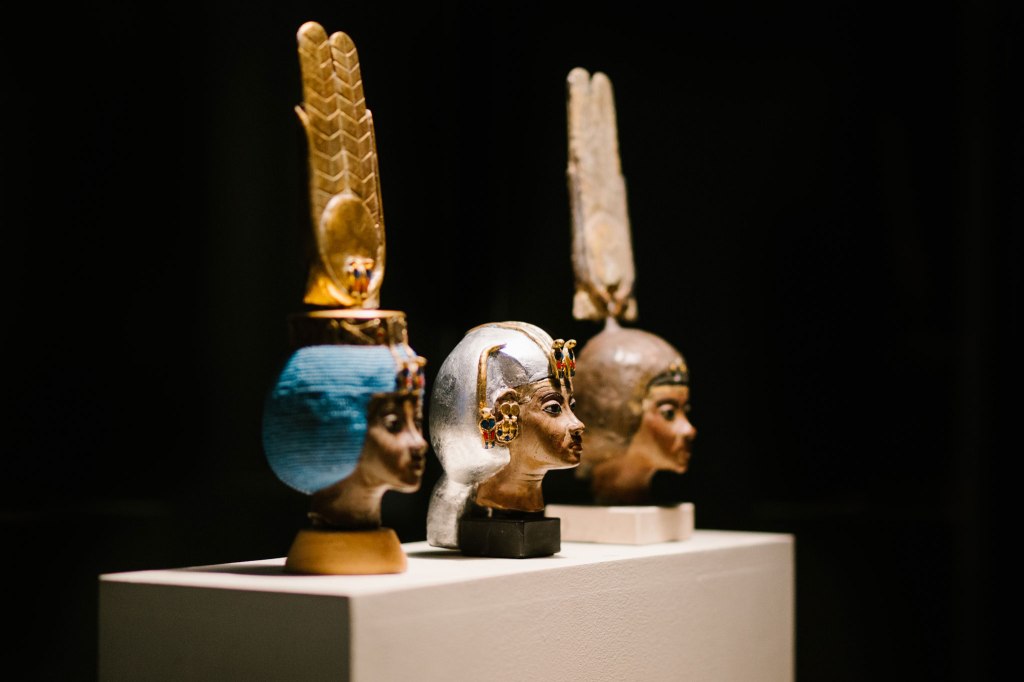
This form of adornment and way of concealing baldness, was very prevalent in ancient Egypt. People at the time invented and used wigs (artificial hair) for a variety of reasons. First and foremost, It was very common for both men and women to remove their natural hair to make themselves free of vermin (parasites and insects). However, Egypt had a very hot climate, so wigs were essentially seen as a form of protection from the scorching sun. This wigs also denoted one’s rank in the society and was viewed as means of displaying religious piety. People of high rank were seen wearing real human hair, and would look more elaborate. People of lower status would wear wigs created from palm fibers and wool. In addition, people who were more religious and pious would also wear wigs. This comes to show that, majority of ancient Egypt’s population were quite fond of wigs. It’s also important to notice how widespread wigs are in this day and age. The concept of wigs today are not only restricted to Egypt, but rather known and used around the world. Wigs have become more complex and closer to real hair. Wigs have become fashion for women, and also a way to conceal bald parts for men. Although, it’s very rare to see men wearing full wigs nowadays. The popularity of wigs increased substantially in the 20th century for women around the globe, and its popularity continues to increase even in the 21st century.
The Tomb and Mask of Tutankhamun

When someone would pass away, their body was preserved by being mummified so their soul would have somewhere to return to. However, if the deceased was an important figure in Egypt, their body after being mummified would be placed in a special coffin, known as the sarcophagus. Pharaohs and people who possessed a lot of wealth, would have coffins made out of gold. Tutankhamun’s Tomb and Mask was very important for the people at his time, and only ruled from 1332 to 1323. His father, Akhenatan tried his best to change ancient Egyptian beliefs and insisted on everyone to worship one god, Aten (sun God). In other words, he was trying to show his people the true way, whilst destroying centuries of Egyptian tradition. Many people resented this and grew resentment for him. However, after Akhenatan’s death in 1334 B.C.E, his son, Tutankhamun (living image of the god Amun) became Pharaoh, who changed his name which was previously Tutankhaten (living image of the god Aten). Tutankhamun also allowed people to go back to their polytheistic worship, and he didn’t want people to view him nor resent him like his father. Tuthankhaten’s reign was very short but also very significant in ancient Egyptian history. He only reached 19, but he managed to bring back the majority of Egyptian’s tradition. After his death, people preserved his body extremely well, placing him in not ONE but THREE coffins, and accompanied it with more than 5000 artifacts/items. This comes to show, his mask signified the revival of their tradition at the time, impacting almost everyone. Tutankhamun’s tomb was the most intact tomb ever discovered by archaeologists, found under a lot of rubble. His tomb which consisted of his coffin and countless artifacts which was a big contribution to Egyptology, the study of ancient Egypt.
It’s honestly extremely difficult to look for and confine my research to only three artifacts that left the greatest legacy in ancient Egypt. This ancient civilization was by far one of the greatest, if not the greatest civilization studied. In terms of its stability, power, and the preservation of its culture and the mark it had on the world. There are many artifacts that may have even greater legacy than those I’ve mentioned. However, I felt it important to mention these three because of their relevancy. People write documents (just like i’m writing one right one) almost every week of their life, so it’s great to read and learn about the first, if not one of the earliest documents discovered. Women around the globe wear wigs to cover their natural hair, and many men fill their bald spots with artificial hair. Thus, showing the ancient Egyptian wigs had on the world, revolutionizing fashion in some ways. Lastly, Egyptology continues to become more complex and bigger, and Tomb of Tutankhamun helped tremendously to this study.
Sources used:
- Mark, Joshua J. “Narmer.” Ancient History Encyclopedia. Ancient History Encyclopedia, May 11, 2020. https://www.ancient.eu/Narmer/.
- “Wigs.” Encyclopedia of Clothing and Fashion. Encyclopedia.com, May 13, 2020. https://www.encyclopedia.com/sports-and-everyday-life/fashion-and-clothing/clothing-jewelry-and-personal-adornment/wigs.
- Parkes, Veronica. “Did You Know That Tutankhamun Was Buried in Not One but THREE Golden Sarcophagi?” Ancient Origins. Ancient Origins. Accessed May 14, 2020. https://www.ancient-origins.net/artifacts-other-artifacts/did-you-know-tutankhamun-was-buried-not-one-three-golden-sarcophagi-007543.
- Young, Sarah P. “The Boy King Behind the Mask: Tutankhamun’s Life and Legacy.” Ancient Origins. Ancient Origins, April 19, 2020. https://www.ancient-origins.net/artifacts-other-artifacts/tutankhamun-0012309.
Illustration Citation
- “Wig: British Museum.” The British Museum. Accessed May 14, 2020. https://www.britishmuseum.org/collection/object/Y_EA2560.
- Dorman, Peter F. “Tutankhamun.” Encyclopædia Britannica. Encyclopædia Britannica, inc., January 31, 2020. https://www.britannica.com/biography/Tutankhamun.
- “Cast; Palette: British Museum.” The British Museum. Accessed May 14, 2020. https://www.britishmuseum.org/collection/object/Y_EA35714.


 Ancient Egypt